New Leeds initiatives put glycoscience on the map

Glycoscience, the ‘science of carbohydrates’, sits at the crossroads of chemistry, biology and physics, shaping how we understand everything from drug design to new materials.
Two new initiatives have recently launched that aim to build the glycoscience momentum both in the UK and across Europe.
What is glycoscience?
We tend to think of sugars as the thing we put in coffee, or the stuff in our diet that is ‘bad for us’. But in scientific terms sugars, or carbohydrates, are some of the most important molecules in living organisms.
Every cell in the human body, for example, produces complex sugar-based molecules called glycans, which are essential for a wide range of complex biological processes.
Glycobiology became an established field in the late 1980s, helping to fuel today's broader interest in glycoscience. This is now a growing area of interest not only for biologists and chemists, but for physicists too. And as new technologies help researchers understand glycans better, there are increasing opportunities to apply them to today’s complex scientific challenges.
Ralf Richter, Professor in Physical Chemistry of Biological Systems, said:
Glycans are intriguing! They are fundamental to life itself, from fertilisation, the very beginning of life, through to development, immune and nervous system functions, and the intricate processes of cellular communication and signalling.
“Yet, our understanding of how glycans perform their myriad of functions remains remarkably limited. We know what they are but we are only just beginning to decipher their language. By bringing together researchers from different disciplines, institutions and countries, glycoscience offers an excellent opportunity to unlock this hidden layer of biology and transform our understanding of health and disease.”
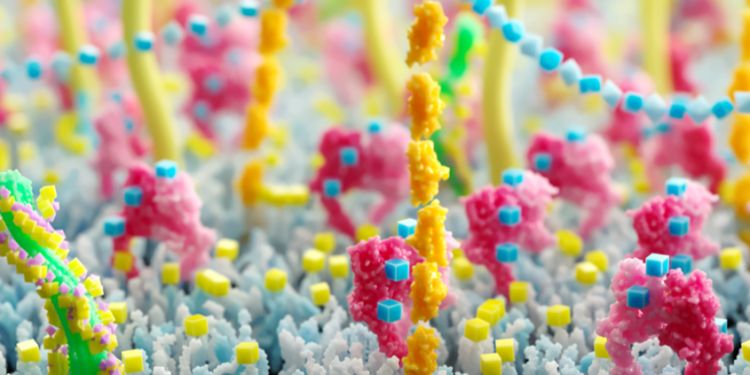
Image: Still from an animation illustrating different aspects of the glycosciences.
The UK has a strong track record in glycoscience research, yet compared to other areas of biology, it remains relatively underexplored. Researchers at Leeds are working to change that, leading local, UK-wide and European initiatives to give glycoscience a much stronger position within the field.
The glycoscience community at Leeds
The GlycoLeeds Network brings together researchers from across the university – from biological sciences to engineering and physical sciences. Established as an informal network in 2023, it is a space for any Leeds researcher with an interest in this emerging science to share ideas, collaborate and work together on common questions where carbohydrates and glycans might hold some of the answers.
Jessica Kwok, Professor in Neuroglycobiology and founding member of GlycoLeeds, said:
The motivation behind GlycoLeeds was simple: provide a space for researchers who are passionate about glycoscience or simply interested in this area, to share their views, tools, questions and knowledge.
“Leeds is unique to have so many glycoscientists from different disciplines in a single institution. We can work better together to advance the science and at the same time increase the visibility of this research area.”
The network now has 70 members from six Schools in three Faculties and has provided the foundation for two major new initiatives that radiate well beyond Leeds.
A national academy
The UK Proteoglycan and Glycosaminoglycan Academy is a new, UK-wide network coordinated by the University of Leeds, involving more than 20 universities and funded by UKRI’s Biotechnology and Biological Sciences Research Council (BBSRC).
Proteoglycans and glycosaminoglycans are special classes of glycans, featuring long and linear carbohydrate chains, that regulate tissue integrity and mechanics, modulate cellular signalling, and control the passage of molecular signals between cells.
Historically, the UK's strength in proteoglycan and glycosaminoglycan science has been spread across dozens of universities, with many researchers working largely in isolation within their own institutions.
The Academy will support more collaboration by connecting people, bringing together expertise, and making it easier for scientists across the country to access shared tools and knowledge. This is particularly important as new tools are critically needed to help scientists understand and manipulate glycans to the level we see for DNA and proteins, two other classes of important biological macromolecules.
As well as online resources, it will offer funding to kick-start new collaborative projects and workshops and events.
As Professor Jessica Kwok, who is also the Coordinator for UK-P/G Academy, explains:
“The UK‑P/G Academy Network provides a powerful platform to strengthen the UK’s leadership in glycoscience. Anchored in Leeds and connected across the country, we aim to create a collaborative environment that will drive innovation and train the next generation of glycoscientists. I am honoured to lead the network and to work with colleagues to achieve these shared ambitions.”
A European training programme

Image: The GLYCOCALYX Consortium
GLYCOCALYX is a new Doctoral Network funded by the European Union’s Horizon Europe research and innovation funding programme under the Marie Skłodowska-Curie scheme.
Led by Leeds, this partnership programme brings together 18 universities, research institutes and industry partners from across Europe to provide postgraduate training opportunities across biology, chemistry and physics for the future generation of glycoscientists.
The first cohort of students will begin in autumn 2026. Doctoral researchers will have the opportunity to work across multiple institutions and gain hands-on experience in academic and industry settings. 15 postgraduate students are currently being recruited to form the cohort of GLYCOCALYX PhD Fellows.
Ralf Richter, Professor in Physical Chemistry of Biological Systems and Coordinator of the GLYCOCALYX Doctoral Network, said:
“Glycocalyces – the sugar-rich coats around our cells – are essential for the proper communication between cells and when disrupted play a role in infectious diseases, aberrant inflammation and immune responses, and cancer. Despite their importance, glycocalyces remain the ‘dark matter’ of biology, owing to the historical lack of experimental and theoretical tools to study them.
The GLYCOCALYX project is an exciting opportunity to bring biologists, chemists and physicists together to change this, and to resolve the dynamic organisation of glycocalyces and how they perform their selective barrier functions essential to multicellular life.
What’s next?
The University will also be hosting the 23rd European Carbohydrates Symposium (EUROCARB) in July 2027, which will bring together glycoscience researchers from across the world.
Bruce Turnbull, Professor of Biomolecular Chemistry and Chair of EUROCARB 2027, said:
We’re thrilled to welcome EUROCARB to Leeds in 2027, bringing together an international community of researchers to exchange ideas, inspire collaboration, and shape the future of glycoscience. The symposium will also provide an invaluable platform for early‑career researchers to present their work, build networks, and engage with leading scientists in the field.
Jessica Kwok, Professor in Neuroglycobiology, agrees, saying:
This is an exciting time: a chance both to strengthen the foundations of glycoscience and to showcase Leeds as a driver of the field. By working closely together over the coming years, we will deliver on the ambitions we have set and ensure lasting impact.
Further information
Interested in glycoscience? There are several ways to connect with what’s happening here at Leeds.
- Find out more about the GLYCOCALYX European Doctoral Network and get in touch at glycocalyx@leeds.ac.uk
- Connect with the UK Proteoglycan and Glycosaminoglycan Academy on LinkedIn
- Join the GlycoLeeds Network and the glycoscience community at the University by contacting Professor Jessica Kwok.